Here is a new drawing of Ecco the little Shih Tzu—the cover of the book Ecco and the Pound. Print it out and color it with your friends!
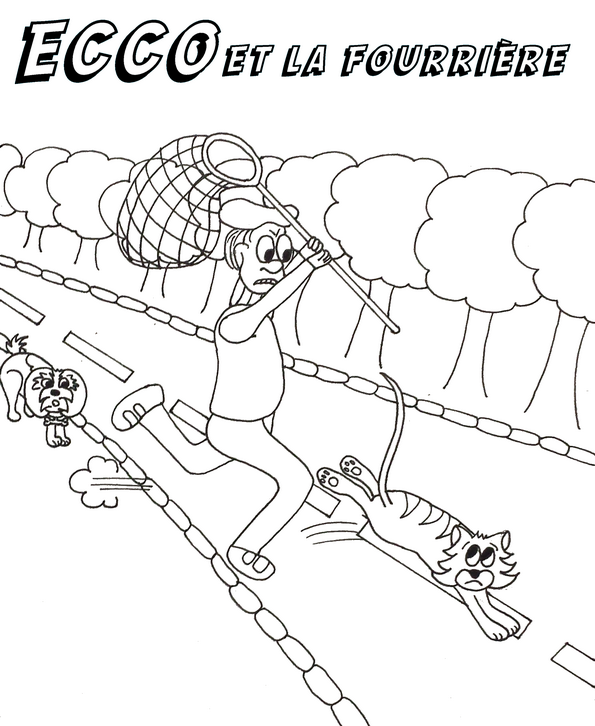
Coloring Page: Ecco and the Kennel
Discover this lovely drawing to download and color, featuring Ecco and his friends in the world of the kennel. A heartwarming image full of fun details, perfect for children who love animals and happy endings.
Through this coloring activity, children can let their imagination run free while rediscovering the charming world of The Adventures of Ecco. A calm and creative moment to share at home or at school!
This coloring page is also a great opportunity to start conversations with children about the importance of adoption, kindness toward animals, and solidarity. Ecco and his friends provide a gentle and positive way to explore these themes in a playful manner.
Once printed, it can also be proudly displayed when finished! Every color chosen by the child brings this scene to life and strengthens their emotional connection with the characters. A simple, joyful, and meaningful activity.
Coloring: A Gentle Gateway to the Inner World of Atypical Children
Coloring has long been seen as a quiet, almost ordinary activity—a preschool pastime, a way to pass a Wednesday afternoon. Yet behind its apparent simplicity lies a true space for exploring imagination, emotions, and self-construction—especially for so-called “atypical” children.
By “atypical,” we mean children who do not think, feel, or act exactly like others. They are often highly sensitive, curious, dreamy, or full of energy and creativity. Some are identified as gifted, autistic, ADHD, or hypersensitive. Others carry no specific label but experience the world in a more intense, nuanced, and unique way. For them, coloring can become much more than a simple hobby: a bridge between their inner world and the outside world.
A judgment-free space
Coloring offers a rare kind of space: one without rigid rules, expectations, or pressure. It’s not about creating a perfect piece of art, but simply filling, choosing, and combining colors freely. For an atypical child, often faced with structured expectations in school or social settings, this freedom is precious.
It’s a moment where they can simply be themselves. Blue can become green, dogs can be purple, trees can be filled with stars. This simple act of coloring becomes a form of expression that doesn’t require words—and one in which many children find relief.
A calming and structuring activity
Highly sensitive or easily overstimulated children can quickly feel overwhelmed by their emotions. Coloring, with its repetitive and gentle rhythm, often helps them return to a calm state. It encourages soft focus without pressure—a kind of moving meditation accessible from a young age.
For children who need visual structure and clear boundaries, coloring provides reassuring outlines. They are not starting from scratch but working within a known space. This flexible framework builds confidence: the child feels capable of completing something, adding their personal touch, and seeing a project through.
A way to enter stories
For many children, fictional characters become meaningful companions—sources of comfort, identification, and inspiration. When an atypical child connects with a character, it is often deeply. They imagine new adventures, extend the story, and even confide in them.
Coloring a familiar character—like in the kennel drawing with Léo the cat—allows the child to strengthen that connection. They are not just coloring; they are continuing a story, becoming part of it. Choosing colors and respecting features becomes an act of care and empathy.
Encouraging emotional expression
Atypical children sometimes struggle to put their feelings into words, especially when their inner world is rich and complex. Coloring becomes an indirect form of expression. Dark or bright colors, changes in a character’s expression, coloring outside the lines—all can reflect an emotional state or need.
It’s not about over-interpreting, but about opening a door to conversation: “I see you used a lot of red today—did that feel good?” or “Do you want to imagine a story with your drawing?” Coloring becomes a bridge for communication.
The importance of choosing the right drawing
Not all coloring pages are equal. An atypical child needs inspiration. Overly simple or repetitive designs may quickly become boring. They often prefer rich, detailed worlds with atmosphere—like the kennel scene. Lively settings, engaging characters, and elements that spark imagination make all the difference.
Soft but meaningful universes that don’t talk down to children, leaving space for imagination while offering a reassuring structure. Ideally, recurring characters help build continuity and attachment.
Coloring alone or together
Some atypical children deeply enjoy being alone in their bubble, and coloring provides that safe cocoon. Others prefer sharing the activity with a parent, friend, or supportive adult. In both cases, coloring adapts to the child’s needs.
In schools or therapeutic settings, it can also be a powerful inclusion tool. It places children with different profiles on equal footing—each progressing at their own pace, without competition. Sometimes, a shared coloring page becomes the start of a friendship.
What if it were also a game?
Coloring can turn into role-playing. Some children narrate stories while coloring: “Here, Ecco is trapped in the kennel—but he’s going to escape!” or “Now it’s a magical night and stars are falling from the sky.” The drawing becomes a miniature stage, animated by the child’s imagination.
For parents and caregivers
Offering a coloring activity to an atypical child means giving them a gentle, accessible tool to express themselves, relax, and refocus. There’s no need to be an artist or educator—just being present, respecting the child’s pace, and valuing their choices is enough.
You can suggest coloring after a busy day, after school, or during waiting moments (like travel or appointments). It’s also ideal for siblings with different temperaments, as everyone can find their place in the activity.
Conclusion: a small gesture with great impact
Coloring is more than just a child’s game. It’s a doorway into the inner world of those who experience life differently. For atypical children, it can become a tool for calming, expressing, building confidence, and connecting.
It’s simple, affordable, yet deeply meaningful when offered with care. Every pencil stroke can be an act of freedom. Every color, an emotion expressed. Every finished drawing, a small victory over the chaos of the world.
So grab your crayons… and let the magic begin.