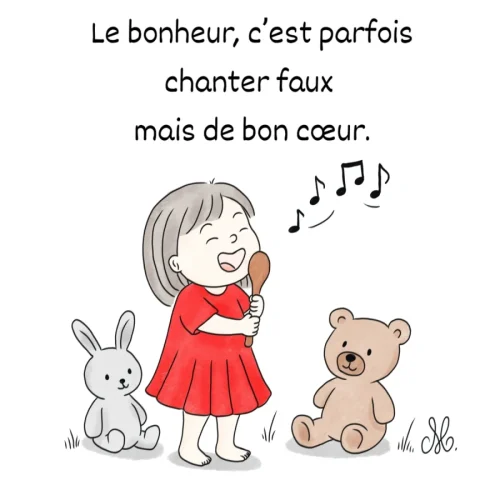
Singing off-key is often seen as a weakness, a flaw that should be corrected. Yet this experience can be far more enriching than it seems. Learning to sing off-key — and especially learning to laugh about it — is a way to cultivate lightness, strengthen self-confidence, and reconnect with the simple joy of singing. This article explores why singing off-key is not a problem and how embracing it with humor can transform your relationship with music and with yourself.
Why We Are Afraid of Singing Off-Key
The fear of singing off-key comes from several factors: fear of judgment, perfectionism, or lack of self-confidence. From childhood, many of us receive implicit or explicit messages about whether our voice sounds “right.” This pressure creates anxiety that prevents us from fully letting go. As a result, we stop ourselves from singing, expressing ourselves, or enjoying music with others.
However, singing off-key does not mean being incapable of music. It is simply a normal step in vocal learning and self-expression. Even professional singers started with wrong notes and still make mistakes sometimes.
The Benefits of Singing Off-Key
Allowing yourself to sing off-key brings many benefits:
- Building self-confidence: Daring to sing without worrying about accuracy helps overcome the fear of other people’s opinions.
- Emotional release: Singing, even badly, allows emotions to be expressed, relieves stress, and helps you feel more alive.
- Increased creativity: Letting go of perfection opens the door to improvisation, vocal play, and musical exploration.
- Strengthening social connection: Singing in groups without fear of mistakes encourages bonding and shared laughter.
Learning to Laugh at Yourself
Humor is a powerful tool for putting off-key singing into perspective. Laughing at your own awkward voice transforms shame into amusement and helps remove the drama from social situations. It also trains the brain to tolerate imperfection and adopt a more flexible attitude toward mistakes.
Some ways to develop this mindset include:
- Singing a well-known song on purpose with different notes or rhythms and observing reactions with lightness.
- Taking part in singing workshops or karaoke sessions where enjoyment matters more than performance.
- Recording your voice and listening back with kindness and humor instead of criticism.
Letting Go: The Key to Vocal Expression
Perfectionism is often the enemy of artistic expression. Singing off-key forces us to accept that nothing will ever be perfect and that making mistakes is completely normal. This mindset improves vocal ease, reduces stress, and encourages spontaneity. The more you accept your wrong notes, the more you enjoy the moment and the music.
Turning Off-Key Singing into a Learning Tool
For teachers or group leaders, singing off-key can become a playful educational tool. It helps:
- Teach children that mistakes are part of learning.
- Develop active listening and musical creativity.
- Encourage free expression without judgment.
For example, asking a group to intentionally sing off-key to create harmonies or invent songs encourages teamwork and musical enjoyment.
Singing Off-Key and Music as Therapy
Many therapeutic approaches use singing and music to improve well-being. Singing off-key intentionally or spontaneously can:
- Reduce anxiety and stress.
- Strengthen self-esteem and self-acceptance.
- Develop creativity and emotional connection with oneself.
The goal is less about correcting pitch and more about enjoying the emotional and sensory experience. Music becomes a safe space to explore and release emotions.
Conclusion
Singing off-key is not a failure, but an opportunity. It helps develop self-confidence, strengthen the ability to let go, and transform singing into a joyful and liberating experience. By learning to laugh at yourself and accept imperfections, anyone can fully enjoy music — even with wrong notes. Singing stops being a performance to fear and becomes a true source of well-being, self-expression, and creativity. Discover the book The Extraordinary Children.
So the next time you sing off-key, smile, laugh, and enjoy it: your voice has the right to be imperfect, and your joy will be even more authentic because of it.