The Emotional Mask: Smiling on the Outside, Suffering in Silence
The Smile May Be Light… But the Silence Behind It Can Be Heavy
Some people smile… even when everything feels heavy inside. Their face remains calm, reassuring, sometimes even radiant. But behind that smile, there may be fatigue, sadness, or emotions that are difficult to express.
This gap between what we show and what we feel has a name: the emotional mask.
A Face with Two Sides
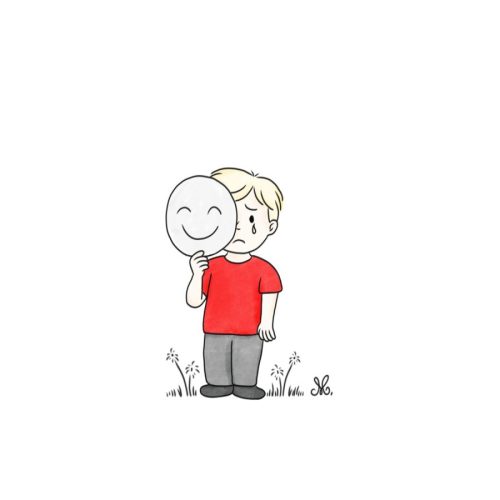
The illustration shows a young boy whose face is half hidden behind a smiling mask. On the other side, a silent tear falls, revealing an emotion that words cannot express.
This image reflects a reality experienced by many children and adults: smiling while suffering inside.
The emotional mask allows people to keep going, to adapt, to avoid disturbing others… but it can also create a distance from their own emotions.
Why Do We Hide Our Emotions?
We often hide our emotions to protect ourselves. Out of fear of judgment, fear of bothering others, or simply because we don’t know how to express what we feel.
For children, this mechanism is even more common. They sometimes learn to appear “fine,” even when they are struggling.
The smile then becomes both a refuge and a mask.
Smiling While Suffering: A Silent Reality
Some people develop the habit of smiling even when they are not okay. This smile becomes automatic, almost invisible.
Behind this mask, there may be deep sensitivity, emotional overload, or a strong need to be understood.
This is often seen in hypersensitive or atypical individuals, who feel deeply but express little.
Recognizing Silent Suffering
A child may seem cheerful on the outside while carrying a rich and sometimes difficult inner world. Silence, changes in behavior, or emotional fatigue are often signs to notice.
Paying attention to what is not said is essential. Behind a smile may be a need for listening, safety, or comfort.
Recognizing this reality helps create a space of trust—without pressure, without forcing.
The Role of Art in Expressing the Unspoken
When words are hard to find, art becomes a language. Drawing, storytelling, and imagination allow emotions to be expressed without complex explanations.
The image acts like a mirror: it helps the child recognize themselves, feel understood, and feel less alone.
Books like
Extraordinary Children
offer this gentle space where emotions can exist freely.
Taking Off the Mask, One Step at a Time
Learning to remove your emotional mask does not happen overnight. It takes time, trust, and a safe environment.
It’s not about saying everything, but about feeling allowed to be yourself—even in moments of vulnerability.
Sometimes, a kind look, a sincere presence, or a safe space to speak is enough for the mask to slowly begin to fall.
Conclusion
The emotional mask protects—but it can also isolate. Behind a smile may lie a more complex, deeper reality.
Learning to look beyond appearances, to listen differently, and to welcome emotions helps create more genuine, human connections.
Because deep down, everyone needs to be seen… even behind their smile.
👉 Discover more illustrations and resources to support emotional expression:
All illustrated books for sensitive children